Source Silicone Release Offset Printing Paper for Labels, Packaging, and Stickers
Compare 30 listings for silicone release offset printing paper from suppliers in China. Buyers can review specifications like GSM, width, and customization options for labels, packaging, and stickers.
Key considerations
Products List




Comprehensive Sourcing Guide
Strategic Sourcing Guide for Silicone Release Offset Printing Paper
The global market for functional packaging and labeling materials continues to expand, with silicone release offset printing paper emerging as a critical component for industries ranging from food service to pharmaceuticals. For procurement professionals, navigating this category requires a disciplined approach that separates marketing assertions from verifiable technical realities. This guide synthesizes observed market data and established industry practices to provide a robust framework for sourcing silicone release paper, specifically focusing on the intersection of silicone coating and offset printing capabilities. Buyers must understand that "silicone release offset printing paper" is not a monolithic product but a category defined by specific substrate compositions, coating technologies, and printing compatibility requirements.
Technical Architecture and Material Composition
Understanding the fundamental construction of silicone release paper is the first step in effective procurement. The core material typically consists of a paper base, often specified as standard paper or kraft paper, which provides the necessary structural integrity for converting processes. In the observed market data, specific models indicate a raw material composition of "Silicone+Paper," confirming that the release agent is a silicone-based polymer applied to the paper substrate. This combination creates a surface with low surface energy, allowing adhesives to be applied to the liner and easily peeled off without leaving residue or damaging the adhesive.
The technical specifications observed in current listings highlight a standard weight of 42gsm for certain variants, though this is not a universal constant. Buyers must verify the basis weight, as it directly influences the stiffness and the release force of the final product. The paper is often processed into rolls, with dimensions such as 25mm width by 800 meters length observed in specific product models. The physical form factor is critical; the product is frequently packed in rolls, sometimes shrink-wrapped or placed in PP bags to protect the delicate silicone coating from contamination during transit. The transparency of the material is generally opaque, which is a standard characteristic for release liners used in industrial applications, ensuring that the adhesive layer is not visible through the liner.
Printing Compatibility and Surface Treatment
The "offset printing" aspect of the keyword implies a specific requirement for surface treatment that allows ink to adhere and dry properly without interfering with the release properties of the silicone coating. The observed data explicitly lists "Offset Printing" as a printing type and "Waterproof" as a key feature, suggesting that the surface has been treated to withstand the moisture and solvents inherent in offset printing processes. This treatment is distinct from the release coating itself; the top surface must accept ink while the bottom surface (or the treated side, depending on the liner type) maintains its release characteristics.
When evaluating suppliers, procurement teams should request technical data sheets that detail the surface tension of the paper. For offset printing to be successful, the surface energy must be high enough to accept ink but controlled enough to prevent the ink from migrating into the silicone layer. The observed product attributes mention "Customized" color options and "Custom Sticker" usage, indicating that the printing surface is versatile. However, buyers must verify that the printing process does not compromise the release force. The standard production model codes, such as CC-143 and CC-063, suggest that manufacturers have specific formulations for different printing needs. It is essential to confirm that the specific model selected is compatible with the buyer's offset printing machinery, as variations in ink viscosity and drying times can affect the final bond strength.
Compliance, Standards, and Safety Verification
In the B2B procurement of materials intended for food, pharmaceutical, and apparel applications, compliance is non-negotiable. The observed data lists "Industrial Use" categories including Food, Agriculture, Apparel, and Pharmaceutical, which necessitates rigorous verification of safety standards. While a low-confidence background note mentions ISO14001:2004, this should not be assumed as a certified status for any specific supplier without direct validation. Instead, buyers must demand current, valid certificates from accredited third-party laboratories.
For food contact applications, the material must comply with relevant regional regulations, such as FDA 21 CFR in the United States or EU Regulation No 10/2011 in Europe. The supplier must provide a Declaration of Compliance (DoC) and, where necessary, migration test results proving that no harmful substances leach from the silicone or paper into the food product. The observed "42gsm" standard and "25mm*800M/Roll" specifications are physical attributes, not safety certifications. Buyers should explicitly ask for the chemical composition of the silicone coating to ensure it is free from heavy metals, phthalates, or other restricted substances. The "3 Years" warranty mentioned in some listings is an unusual attribute for a consumable liner and may refer to storage stability or shelf life under specific conditions; this requires clarification to ensure it does not imply a structural guarantee that is unrealistic for a paper-based product.
Cost Drivers and Economic Factors
The pricing of silicone release offset printing paper is influenced by several volatile factors, primarily the cost of raw materials and the complexity of the coating process. The observed price range of 0.21 to 2500 USD reflects the vast difference between small sample orders and bulk industrial contracts. The minimum order quantity (MOQ) varies significantly, ranging from 1 unit for samples to 1,000,000 units for large-scale production runs. Specific listings indicate an MOQ of 1000kg or 1000 kilometers, highlighting that volume is a primary driver of unit cost.
Buyers should anticipate that the "Wholesale" advantage and "3000 Metric Ton Per Month" supply ability of a supplier will directly impact the final price. Larger supply capabilities often correlate with better economies of scale, but they also require the buyer to commit to larger volumes. The "T/T" (Telegraphic Transfer) payment term is standard in this industry, but buyers should negotiate payment schedules that align with delivery milestones. The "Within 15 Days" and "5-10 days" delivery times observed suggest that lead times are generally short, but this can fluctuate based on raw material availability and production capacity. When calculating total cost of ownership, buyers must factor in the cost of waste due to printing errors, which is higher with lower-quality release paper that may cause slippage or misregistration during the printing process.
Supplier Evaluation and Operational Reliability
Selecting a supplier for silicone release paper requires a deep dive into their operational capabilities and quality assurance systems. The observed data mentions "21 Years Experience" as a supplier advantage, which is a strong indicator of technical maturity, but it must be corroborated with references and case studies. A reliable supplier should demonstrate a consistent ability to maintain the "Functional Layer" integrity of the paper, ensuring that the silicone coating is applied evenly and does not vary in thickness across the roll.
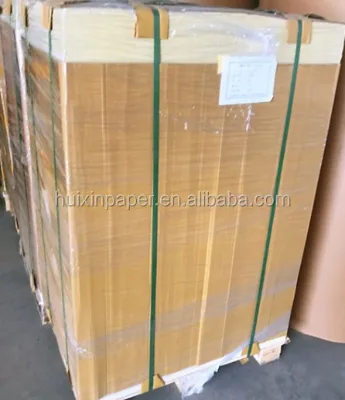
The packing methods observed, such as "in Rolls Shrink Wrapped Load on Container" and "PE Bag," are critical for preventing damage during shipping. Buyers should verify that the supplier uses moisture-proof packaging, as the paper substrate is hygroscopic and can absorb moisture, which affects both the printing quality and the release force. The "Samples: Freely Offered" and "Sample: Freely" attributes indicate that most suppliers are willing to provide test units, which is a crucial step in the evaluation process. Procurement teams should use these samples to run their own offset printing trials, checking for ink adhesion, drying time, and release force consistency. Furthermore, the "Customized" nature of the product means that the supplier must have the flexibility to adjust roll widths, lengths, and coating weights to meet specific customer requirements.
Quality Control and Long-Term Procurement Strategy
Implementing a robust quality control (QC) protocol is essential for maintaining the integrity of the supply chain. The "Hardness: Soft" attribute observed suggests that the paper has a specific tactile quality, but the primary QC metric should be the release force, typically measured in grams per inch (g/in) or Newtons per centimeter (N/cm). Buyers should establish a clear specification for the release force range that matches their converting equipment. Variations in release force can lead to web breaks, misalignment, and increased downtime.
For long-term procurement, buyers should consider the stability of the supplier's raw material sources. The "Fujian, China" origin is a common hub for paper and coating production, but relying on a single geographic source can introduce supply chain risks. Diversifying suppliers or establishing a secondary source is a prudent strategy. The "A" standard mentioned in the data is vague and should be replaced with specific, measurable quality standards agreed upon in the contract. Additionally, the "Without Flavor" attribute is relevant for food applications, ensuring that the paper does not impart any odor to the product.
| Evaluation Criterion | Key Verification Point | Risk if Ignored |
|---|---|---|
| Release Force Consistency | Test samples across roll width and length | Web breaks, misregistration |
| Surface Tension | Verify compatibility with specific inks | Poor ink adhesion, smearing |
| Moisture Resistance | Check packaging and storage conditions | Swelling, coating delamination |
| Chemical Compliance | Request DoC for food/pharma use | Regulatory fines, product recalls |
| Supply Continuity | Assess raw material sourcing and capacity | Production stoppages |
In conclusion, sourcing silicone release offset printing paper requires a balance of technical scrutiny and strategic planning. By focusing on the verified attributes of material composition, printing compatibility, and compliance, buyers can mitigate risks and ensure a steady supply of high-quality liners. The observed market data provides a baseline for expectations, but the ultimate success of the procurement process depends on rigorous testing and clear communication of requirements with the supplier.
FAQs
What materials are used for silicone release offset printing paper?
The core material typically consists of a paper base combined with a silicone coating. Specific models indicate a raw material composition of silicone and paper to ensure low surface energy for easy adhesive peeling without residue.
Can this paper be customized for specific printing needs?
Yes, customization is available for various product attributes including color and dimensions. Suppliers offer flexible options to adjust roll widths and lengths to meet specific customer requirements for offset printing applications.
What are the standard packaging methods for these rolls?
Products are frequently packed in rolls, sometimes shrink-wrapped or placed in PP bags. Specific listings show packing in rolls shrink wrapped load on container or PE bags to protect the delicate silicone coating during transit.
How long is the typical delivery time for orders?
Delivery times are generally short, ranging from within 5 to 15 days depending on the supplier. Some listings specify delivery within 15 days, while others indicate a faster turnaround of 5 to 10 days for standard orders.
What is the minimum order quantity for bulk purchases?
Minimum order quantities vary significantly, ranging from 1 unit for samples to 1,000,000 units for large-scale production. Specific listings indicate an MOQ of 1000kg or 1000 kilometers, highlighting that volume is a primary driver of unit cost.
Is the paper suitable for food and pharmaceutical applications?
Yes, the industrial use categories include food, agriculture, apparel, and pharmaceutical sectors. Buyers must verify safety standards and request declarations of compliance to ensure no harmful substances leach from the silicone or paper into the product.
What is the standard weight or thickness of the paper?
Specific models indicate a standard weight of 42gsm for certain variants, though this is not a universal constant. The basis weight directly influences the stiffness and release force of the final product used in converting processes.